



We’ve all been there: you’re in the middle of a disagreement, emotions are high, and suddenly you hear yourself say, “You never listen to me!” or “You always make me feel like I’m the problem!”
Boom. Defences up. Conversation over.
But what if you could turn those explosive moments into opportunities for real connection? Enter the humble yet mighty “I” statement—the communication hack your relationships have been waiting for.
So, What Is an “I” Statement?
An “I” statement is a way of expressing your thoughts, feelings, or needs without making the other person feel attacked. It’s a subtle shift in language that keeps the door open instead of slamming it shut.
Compare these:
- “You’re always late—you don’t respect my time.”
vs. - “I feel anxious when I’m waiting and don’t know when you’ll arrive. I value knowing what to expect.”
See the difference? One builds a wall. The other builds a bridge.

Why “I” Statements Work
It’s not magic—it’s neuroscience. When people feel blamed or judged, their brain kicks into defence mode. But when you speak from your own experience, you invite understanding instead of opposition. Here’s what makes “I” statements so powerful:
- They lower defensiveness. You’re not accusing—you’re sharing.
- They model vulnerability. You’re showing up with your feelings, not your armour.
- They invite connection. You’re letting the other person into your internal world.
- They create space for collaboration. Now it’s not you vs. them—it’s you two vs. the problem.
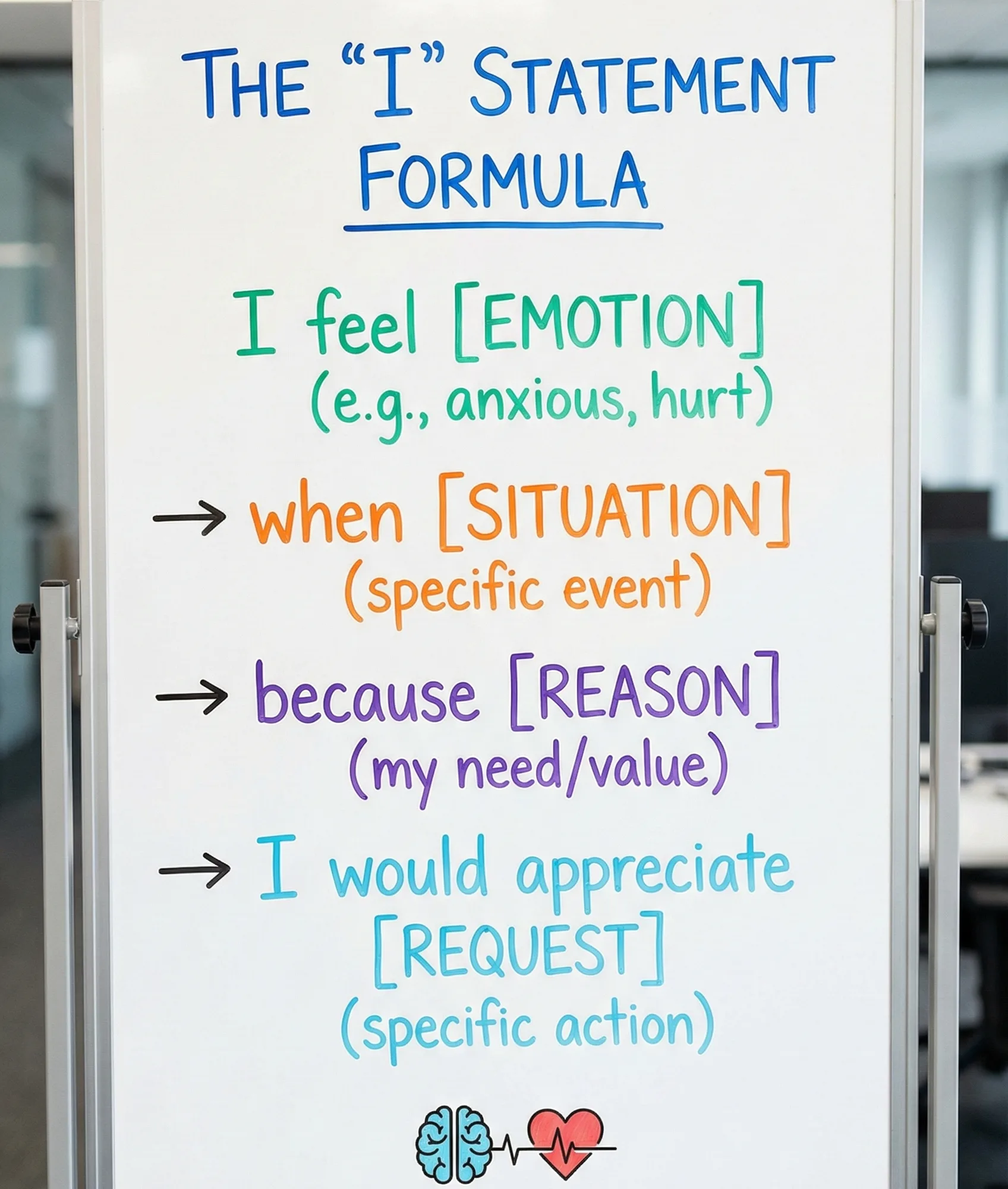
The Simple Formula
You don’t need a PhD to use “I” statements—just this classic formula:
I feel [emotion] when [situation] because [reason]. I would appreciate [need/request].
Example:
“I feel disconnected when we spend dinner on our phones because I really value quality time. I’d love if we could put them away during meals.”
Or even simpler:
“I feel hurt when jokes are made about my job. It’s something I care deeply about.”
Common Pitfall: Sneaky “You” Statements in Disguise
Watch out for these fake “I” statements:
- “I feel like you’re being selfish.” (Still a “you” statement in disguise!)
- “I think you don’t care.” (Not a feeling—try naming an emotion.)
Stick to your feelings and your experience. That’s where the gold is.
Start Small, Keep It Real
You don’t have to overhaul every conversation overnight. Try an “I” statement the next time you feel misunderstood, disappointed, or even excited. This practice isn’t just for conflict—it’s also great for expressing gratitude or setting boundaries with warmth.
Bottom Line: Speak From the ‘I’—Not the High Horse
“I” statements are more than a communication technique—they’re a relational mindset. They remind us that we’re not perfect, and we’re not mind readers. But we can be honest, respectful, and emotionally brave.
So next time you’re tempted to point a finger, try pointing inward—and watch how much more connection follows.